
Press Release
Not a ‘Nationality Display in Comments Law’ but rather a ‘Internet User Location Tracking Law’ – OpenNet submits opposition statement regarding the Information and Communications Network Act amendment bill
Open Net Korea submitted a statement of opposition to the National Assembly on March 20 regarding...
YouTube Channel of Civil Society Organization Deleted Without Specific Explanation – Channel Restored After Raising the Issue with Google’s Global Human Rights Policy Team
Civil Society Organizations Call for Transparency and Preventive Measures In March and April, the...
Proposal of “Freedom of Expression Policy Tasks” to the New Government –”We Want a President Who Defends Article 21 of the Constitution and Freedom of Expression!”
Freedom of expression is a fundamental pillar of a democratic society, enabling individuals to...
KTV Withdraws the Copyright Complaint Over the Satirical Video of the President — Highlighting the Need for Substantive Public Debate on the Criminalization of Copyright Infringement
KTV has withdrawn its criminal complaint against singer Baek Ja. In February 2024, KTV filed a...
Petition for the Right of Consumers to Reform and Refurbish Products to Make Them Last Longer
Korean version text
LITIGATION
Open Net Successfully Defended the Police Defamation Victim HONG Ga-hye at the Supreme Court
Open Net provided legal support to Ga-hye Hong, who was accused of "defamation of the maritime...
Open Net Filed a Constitutional Challenge against the Mandatory Mobile Phone Registration Law
Please read the Korean original here.
Court of appeals confirmed that the blocking of “North Korea Tech” website is unlawful
Court of appeals confirmed that the blocking of “North Korea Tech” website is unlawful The right...
Open Net Won the Lawsuit against KCSC’s Illegal Blocking of northkoreatech.org!
Open Net Won the Lawsuit against KCSC’s Illegal Blocking of northkoreatech.org! On April...
Open Net Successfully Defended BitTorrent Users in a Criminal Case – This Victory will Restrain Copyright Trolls
Please read the Korean original here.
OPEN SEMINAR
APrIGF 2022 ‘Future of Work: Achieving a Sustainable Gig Economy’ Session Participation Review
see https://www.opennet.or.kr/21980 for Korean post
[Statement] National Assembly Science and ICT Committee ‘Network Usage Fee Act’ Public Hearing
see https://www.opennet.or.kr/21785 for Korean post
Part 7 of Open Net’s Special Lecture Series on Media Literacy – A Bit of Legal Expertise for Digital Literacy (14:00 October 4, Online)
Part 7 of Open Net’s Special Lecture Series on Media Literacy A Bit of Legal Expertise for Digital...
Open Net Hosts National Assembly Seminar on the Blocking of Access to North Korean Media on the Internet
The Ministry of Unification recently announced plans to gradually open up access to North Korean...
Part 6 of Open Net’s Special Lecture Series on Media Literacy – Feminism and Literacy as Critical Thinking (14:00 September 6, Online)
Part 6 of Open Net's Special Lecture Series on Media Literacy Feminism and Literacy as Critical...
COURT ACTIONS
No Results Found
The page you requested could not be found. Try refining your search, or use the navigation above to locate the post.
education
[Joint Statement] The Ministry of National Defense Must Immediately Release the Research on ‘Survey on the Military Service of Transgender’
The disclosure of research will be the starting point for equality.Data scarcity and gaps are...
DSA’s Balanced Model & Practical Challenges for Korean Legislation
Date & Time: Tuesday, April 8, 2025 | 2:00 PM – 6:00 PM Venue: Conference Room 2, Members’...
Legislation Driven by Anti-Foreigner Sentiment in the Name of Elections – An Unconstitutional Proposal that Violates Equality and Freedom of Expression
Legislation Driven by Anti-Foreigner Sentiment in the Name of Elections An Unconstitutional...
UNESCO-ASEAN platform regulation guideline at Johannesburg
UNESCO and ASEAN unveiled two days before the February 12-13 International Conference on Digital...
Privacy regulation applied to AI training, inference, and feedback loop: Open Net at AI Action Summit
The Centre for Communications Governance (CCG) at the National Law University Delhi and the Global...
POLICY RESEARCH
Open Net Co-hosted the Parliamentary Conference “Fundamental Digital Rights and the Constitution Reform”
Open Net co-hosted the parliamentary conference “Fundamental Digital Rights and the Constitution...
Open Net Hosts “Copyright Act Reform for the Protection of Creative Labor” Seminar at the National Assembly
Open Net co-hosted a seminar on “Copyright Act Reform for the Protection of Creative Labour” with...
Open Net co-hosted “Disclosure of Court Decisions for Transparent Judicial Procedure” at the National Assembly
Open Net co-hosted “Disclosure of Court Decisions for Transparent Judicial Procedure” with MP MIN...
Open Net co-hosted the seminar “Artificial Intelligence (AI), Threat or Opportunity?” at the National Assembly
Open Net co-hosted the seminar “Artificial Intelligence (AI), Threat or Opportunity?” with the...
Open Net Hosts “AI, Threat or Opportunity? Lessons from the Economist Report” Seminar at the National Assembly
Please read the Korean original here.
CAMPAIGN
Stop Internet Censoring
We have seen many attempts to censor the Internet under the pretext of copyright protection. Notorious attempts are SOPA and PIPA of 2012, which triggered the largest online protest in history and was eventually withdrawn, and ACTA, a plurilateral trade deal killed by the European Parliament in 2012. Now, Korean government tries to enact a much stronger internet censoring rule. If it passes the legislative body, a copyright protection agency may cut off access to websites that the agency views as copyright infringing. The concerns over mass surveillance and privacy vulnerabilities by the proposed rule are widespread amid the government’s new drive to block “https” traffic by SNI eavesdropping (See, press release of Korea Communication Commission on February 12, 2019 and press release of MCST on May 2, 2018, both in Korean).

Intermediary Liability Campaign
Korean law (Copyright Act Article 103, Information Communication Network Act Article 44-2) requires intermediaries to take down all content for which anyone sends a takedown notice, regardless whether the content violates any right or law, not as a condition of qualifying for a safe harbor but as a positive obligation. As a result of this ‘mandatory’ notice-and-takedown system, the intermediaries are forced to take down thousands of contents daily which they believe to be perfectly lawful. Also, Korean laws require some intermediaries like P2P and cyberlockers to implement ‘technical measures’ to filter out copyright infringing material (Copyright Act, Article 104) and obscenity (Telecommunications Business Act Article 22-3 Paragraph 1), and requires all intermediaries to implement technical measures to filter out child pornography (Children and Juvenile Sex Protection Act Article 17). These ‘technical measures’ requirement ends up requiring the intermediaries to monitor each and every third party content posted on their services, turning the Internet into a space open to only those contents implicitly permitted by the intermediaries.
Open Net Korea has engaged in various efforts to bring the Korean law into compliance with the international norm, including but not limited to participating in the Steering Committee of the Manila Principles for Intermediary Liability, co-authoring a Good Practice Guideline for Intermediary Liability Regime published by the Network of Centers for Internet and Society, and calling the international community to write to the relevant officials.
Open Payment Campaign
Currently, the law requires all online payments above 300K Korean won (about US$300) to be signed by so-called “accredited certificates”, which are backed only by a Korean government agency operating as a root CA but none of the internationally recognized certificate accreditation agencies and therefore require various plugins to be downloaded from various vendors (most often through Active X technology due to the 90% plus dominance of Internet Explorer in the country) enabling and protecting the certificates. Such monolithic “closed” payment rule made the Korea-based e-commerce inaccessible for overseas customers and very inconvenient for domestic customers and indoctrinated Korean customers into a dangerous habit of accepting downloads of unknown origins, who therefore became easy targets for pfishing and other financial frauds. Open Net calls for the dismantling of the payment rule mandating use of the government-backed-certificates that are not really “accredited” in any global sense.

In 2013, Open Net ran a petition drive to file a Citizens’ Audit on the Korean Financial Services Commission responsible for implementing the closed payment rule, and obtained the sponsorship of more than 300 signatories who signed on-line at this site.
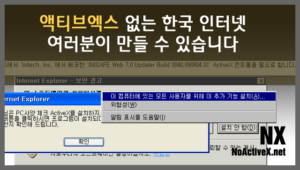
In 2013, Open Net ran a grassroots petition drive here to demand that the authorities overhaul the online payment rule so that the Korean net users can make payments without the nail-biting, computer-freezing, caution-numbing downloading of all the plugins. Several thousands have signed on putting pressure on the legislators and authorities.

In the latter half of 2013, Open Net lobbied for a Digital Signature Act amendment bill allowing digital signatures to be approved by internationally recognized root authorities and a Electronic Financial Transactions Act amendment bill requiring the Financial Services Commission rule-making to be technology-neutral in accordance with the Basel Principles. Here is the campaign headquarter page from which people will gather information and write mails, Twits, FB entries alerting the relevant lawmakers.

“Real” Child Abuse Prevention Campaign
The law punishes virtual images of imaginary children such as in animation and adult-actor films under the same legal scheme as child pornography made of video-recording or “morphing” of real children, which carry mandatory minimum sentence of 5 years for production and, among other things, 10 years of employment ban and 20 years of residential address tracking, not to mention the stigma of “child sex offenders”. Such law resulted in police actions focused on online uploading and downloading of files at the expense of depleted resources for pornography involving real children, which ironically ended up indictment of juvenile computer users as “child sex offenders”. Open Net calls for amendment of the Child and Juvenile Sexual Abuse Prevention Act to make the law serve its real purpose.
Campaign to Strike Out the Three Strikes Rule
In Korea, the copyright Three-Strikes-Out Rule came into effect on July 23, 2009 and gave the government a power to disconnect users from the Internet in the name of copyright protection. So far, although no one has been disconnected from the Internet, 408 website accounts have been shut down and 468,446 warnings or takedowns have been executed by the South Korean government (The Ministry of Culture and the Korean Copyright Commission, an entity empowered to do so without judicial scrutiny under the three-strikes rule). There is no prior judical scrutiny. The government has the full discretion in determining whether the postings or the user accounts are to be taken down or not. This is administrative censorship done fast and cheap for the rightholders, however, suppressing freedom of expression and communication and Internet users’ fundamental right to access, and endangering the future of the free and open Internet.