
Press Release
Copyright Law Should Not Be Used to Criminalize Political Satire
Copyright Law Should Not Be Used to Criminalize Political Satire Misusing copyright claims to...
Open Net to Submit Opinion Opposing Bill Designating “Mocking and Hate Information” as Illegal Online Content
Open Net Korea plans to submit its opinion to the National Assembly opposing the proposed...
Regretting the Constitutional Court’s Decision Upholding the “Nth Room Prevention Act”
The Constitutional Court Upholds the “Nth Room Prevention Act” — A Troubling Decision Mandatory...
Minors’ Digital Rights Trapped in State Paternalism
Minors’ Digital Rights Trapped in State Paternalism Regretting the Constitutional Court’s Decision...
[Press Conference] Lawsuit Challenging the Defense Ministry’s Refusal to Disclose the “Transgender Military Service” Research Report
Press Conference on Lawsuit Challenging the Defense Ministry’s Refusal to Disclose the...
LITIGATION
Victory for Free Speech: Supreme Court Overturns NEC’s Censorship Orders
On December 11, 2025, the Supreme Court of Korea ruled that the National Election Commission (NEC)...
OpenNet Secures Not Guilty Verdict in Case Where Individual Was Criminally Charged for Using Free Font
Cases Where Only "Non-Commercial Use ONLY" Terms Are Violated Should Not Face Criminal...
Luxury Trademarks vs. Consumers’ Right to Repair and Refashion – A public hearing scheduled at the Supreme Court
Louis Vuitton has filed trademark infringement lawsuits against small, independent repair...
Open Net Files a Constitutional Complaint Challenging the Deepfake Prohibition Provisions under Public Official Election Act
Open Net Korea filed a constitutional complaint on October 1, 2025, challenging the deepfake...
Open Net Wins at Supreme Court : Submitting Personal Information in Complaints Does Not Violate PIPA
The Korean Supreme Court, in its decision on August 28, 2025 (2025Do6239), ruled that including...
OPEN SEMINAR
[RightsCon 2025] Defamation Law Undermining Freedom of Press – Media Defence Roundtable Review
Open Net Korea participated in a roundtable hosted by the Media Defence on February 24, 2025, as...
[Colloquium Presentation] The Bizarre World of Happiness Drawn by Image Generative AI
On January 17, 2025, Kyoungmi (Kimmy) Oh attended a colloquium titled “Is Generative AI a Game...
[RightsCon 2025] Data Privacy in the Era of AI: Public and Private Sector Perspectives
On Feb 27, 2025, Kyoungmi (Kimmy) Oh gave a speech in the session, "Data protection in the era of...
[RightsCon 2025] Emotional Activism: Re-humanizing Digital Spaces and Narratives for Collective Care Action
On Feb. 26th, 2025, Kyoungmi (Kimmy) Oh participated in the workshop, “Emotional Activism:...
2024 Cultural Diversity Seminar: Questions for Expanding Cultural Diversity in the Digital Environment
On December 18, 2024, the Wanju Cultural Foundation held a seminar on cultural diversity,...
COURT ACTIONS
Open Net Successfully Defends Against Exploitative Font Copyright Lawsuit in Its Public Interest Litigation Case
You can read the Korean original here.
Open Net Expresses Disappointment Over Court Decision on ‘Bad Fathers’ Case and Urges the National Assembly to Abolish Criminal Truth Defamation Law
You can read the Korean original here.
Open Net Korea Welcomes the Constitutional Court’s Decision Nullifying the Internet Real-Name System for the Election Campaign Period
The Court Held the System Unconstitutional for ‘Infringement on the Freedom of Anonymous...
Open Net Welcomes the Court’s Decision to Acquit Those Charged With Truth Defamation for Running a Website That Lists Parents Who Refuse to Pay Child Support
On January 15, all 7 jurors and the full bench acquitted the operator of a website called 'Bad...
The Supreme Court Must Reverse the Lower Court’s Unfair Decision That Strips the Possibility of Fighting Against Unlawful Access to Subscriber Data
Subscriber data (also known as communications data) refers to a subscribers' personal information...
education
Finetuning purpose of data protection law in Korea: data subjects’ rights on pseudonymized data – Keynote at APSN
K.S. Park's Keynote speech at 10th Asian Privacy Scholars Network held at Chinese University of...
Open Net trains Malaysian lawyers on strategic litigation for media freedom and other laws on media eco-system – focusing on profit sharing, data protection, platform regulation
On September 12-13, 2026, Open Net was invited to give lectures in a Malaysian lawyers' training...
[2026 KrIGF] Metric Compatible Fonts used to share documents made of proprietary fonts and legal uncertainty
On July 2, 2026, K.S. Park, Director of Open Net Korea, participated in a KrIGF session to discuss...
Open Net unpacks “Korean DSA” and what not to do for Asian countries in fighting disinformation with Sigla Research
On August 28, 2026, Open Net was invited to speak on digital authoritarianism and its...
Open Net pleads for data breach redressability & class action before UN RBHR Forum APAC
On September 17, 2026, Open Net and Tifa Foundation co-hosted a policy lab "Platform Power,...
POLICY RESEARCH
2023/11/9 Joint seminar: UC Irvine Int’l Justice Clinic & KU Int’l Human Rts Clinic on Women on Web
On November 9, 2023 (KST), UC Irvine Law School’s International Justice Clinic and Korea...
DRAPAC Series: South Korea’s Lessons for Threats to Southeast Asian Internet Freedom
In this episode of the DRAPAC Series, Kyung Sin ‘KS’ Park, a professor at the Korea University...
[Press Conference] In Condemnation of ‘Jeonju Gender Equity’ for Its Decision to Censor and Discriminate Based on Artists’ Conscience
*An English translation is currently unavailable for this publication. You can find the original...
Open Net Hosts National Assembly Seminar on the Blocking of Access to North Korean Media on the Internet
The Ministry of Unification recently announced plans to gradually open up access to North Korean...
Part 3 of Open Net’s Special Lecture Series on Media Literacy – How to Distinguish Between Good and Bad News (14:00 June 8, Online and Offline)
You can read the Korean original here.
CAMPAIGN
Stop Internet Censoring
We have seen many attempts to censor the Internet under the pretext of copyright protection. Notorious attempts are SOPA and PIPA of 2012, which triggered the largest online protest in history and was eventually withdrawn, and ACTA, a plurilateral trade deal killed by the European Parliament in 2012. Now, Korean government tries to enact a much stronger internet censoring rule. If it passes the legislative body, a copyright protection agency may cut off access to websites that the agency views as copyright infringing. The concerns over mass surveillance and privacy vulnerabilities by the proposed rule are widespread amid the government’s new drive to block “https” traffic by SNI eavesdropping (See, press release of Korea Communication Commission on February 12, 2019 and press release of MCST on May 2, 2018, both in Korean).

Intermediary Liability Campaign
Korean law (Copyright Act Article 103, Information Communication Network Act Article 44-2) requires intermediaries to take down all content for which anyone sends a takedown notice, regardless whether the content violates any right or law, not as a condition of qualifying for a safe harbor but as a positive obligation. As a result of this ‘mandatory’ notice-and-takedown system, the intermediaries are forced to take down thousands of contents daily which they believe to be perfectly lawful. Also, Korean laws require some intermediaries like P2P and cyberlockers to implement ‘technical measures’ to filter out copyright infringing material (Copyright Act, Article 104) and obscenity (Telecommunications Business Act Article 22-3 Paragraph 1), and requires all intermediaries to implement technical measures to filter out child pornography (Children and Juvenile Sex Protection Act Article 17). These ‘technical measures’ requirement ends up requiring the intermediaries to monitor each and every third party content posted on their services, turning the Internet into a space open to only those contents implicitly permitted by the intermediaries.
Open Net Korea has engaged in various efforts to bring the Korean law into compliance with the international norm, including but not limited to participating in the Steering Committee of the Manila Principles for Intermediary Liability, co-authoring a Good Practice Guideline for Intermediary Liability Regime published by the Network of Centers for Internet and Society, and calling the international community to write to the relevant officials.
Open Payment Campaign
Currently, the law requires all online payments above 300K Korean won (about US$300) to be signed by so-called “accredited certificates”, which are backed only by a Korean government agency operating as a root CA but none of the internationally recognized certificate accreditation agencies and therefore require various plugins to be downloaded from various vendors (most often through Active X technology due to the 90% plus dominance of Internet Explorer in the country) enabling and protecting the certificates. Such monolithic “closed” payment rule made the Korea-based e-commerce inaccessible for overseas customers and very inconvenient for domestic customers and indoctrinated Korean customers into a dangerous habit of accepting downloads of unknown origins, who therefore became easy targets for pfishing and other financial frauds. Open Net calls for the dismantling of the payment rule mandating use of the government-backed-certificates that are not really “accredited” in any global sense.

In 2013, Open Net ran a petition drive to file a Citizens’ Audit on the Korean Financial Services Commission responsible for implementing the closed payment rule, and obtained the sponsorship of more than 300 signatories who signed on-line at this site.
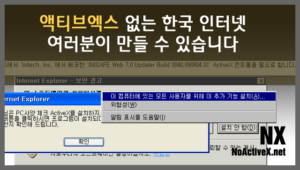
In 2013, Open Net ran a grassroots petition drive here to demand that the authorities overhaul the online payment rule so that the Korean net users can make payments without the nail-biting, computer-freezing, caution-numbing downloading of all the plugins. Several thousands have signed on putting pressure on the legislators and authorities.
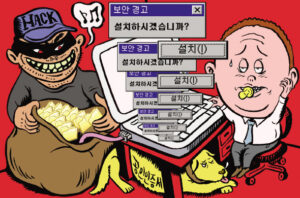
In the latter half of 2013, Open Net lobbied for a Digital Signature Act amendment bill allowing digital signatures to be approved by internationally recognized root authorities and a Electronic Financial Transactions Act amendment bill requiring the Financial Services Commission rule-making to be technology-neutral in accordance with the Basel Principles. Here is the campaign headquarter page from which people will gather information and write mails, Twits, FB entries alerting the relevant lawmakers.

“Real” Child Abuse Prevention Campaign
The law punishes virtual images of imaginary children such as in animation and adult-actor films under the same legal scheme as child pornography made of video-recording or “morphing” of real children, which carry mandatory minimum sentence of 5 years for production and, among other things, 10 years of employment ban and 20 years of residential address tracking, not to mention the stigma of “child sex offenders”. Such law resulted in police actions focused on online uploading and downloading of files at the expense of depleted resources for pornography involving real children, which ironically ended up indictment of juvenile computer users as “child sex offenders”. Open Net calls for amendment of the Child and Juvenile Sexual Abuse Prevention Act to make the law serve its real purpose.
Campaign to Strike Out the Three Strikes Rule
In Korea, the copyright Three-Strikes-Out Rule came into effect on July 23, 2009 and gave the government a power to disconnect users from the Internet in the name of copyright protection. So far, although no one has been disconnected from the Internet, 408 website accounts have been shut down and 468,446 warnings or takedowns have been executed by the South Korean government (The Ministry of Culture and the Korean Copyright Commission, an entity empowered to do so without judicial scrutiny under the three-strikes rule). There is no prior judical scrutiny. The government has the full discretion in determining whether the postings or the user accounts are to be taken down or not. This is administrative censorship done fast and cheap for the rightholders, however, suppressing freedom of expression and communication and Internet users’ fundamental right to access, and endangering the future of the free and open Internet.