
On March 7, Open Net, in collaboration with the social cooperative Parti, hosted a "Fact-Check-Thon" at the Heyground Seoul Forest branch in Seongdong-gu, Seoul.
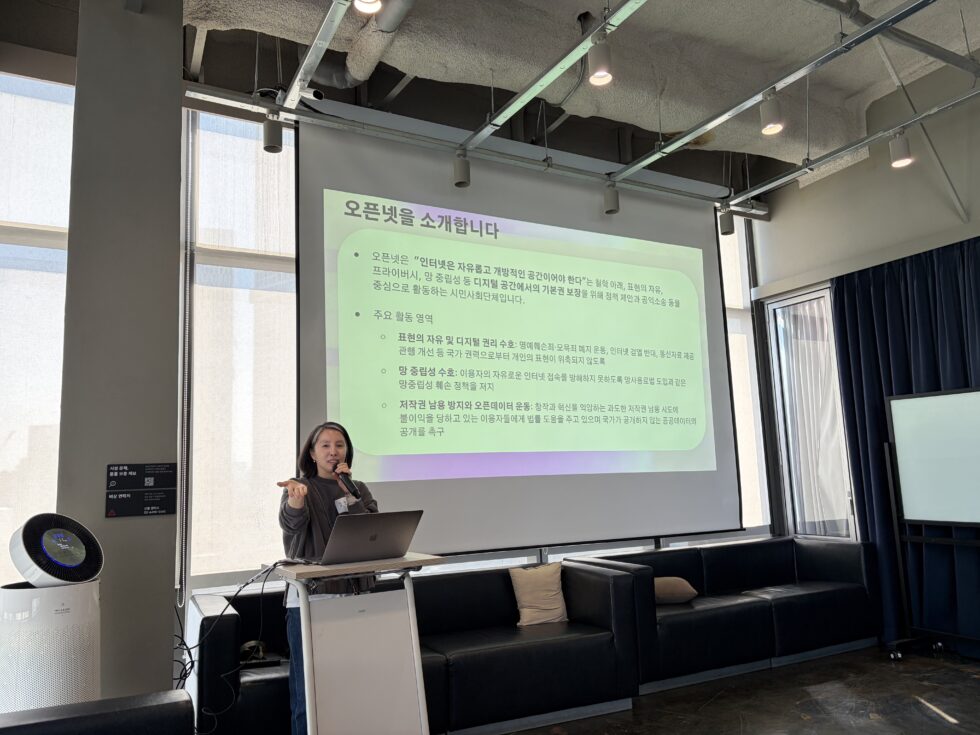
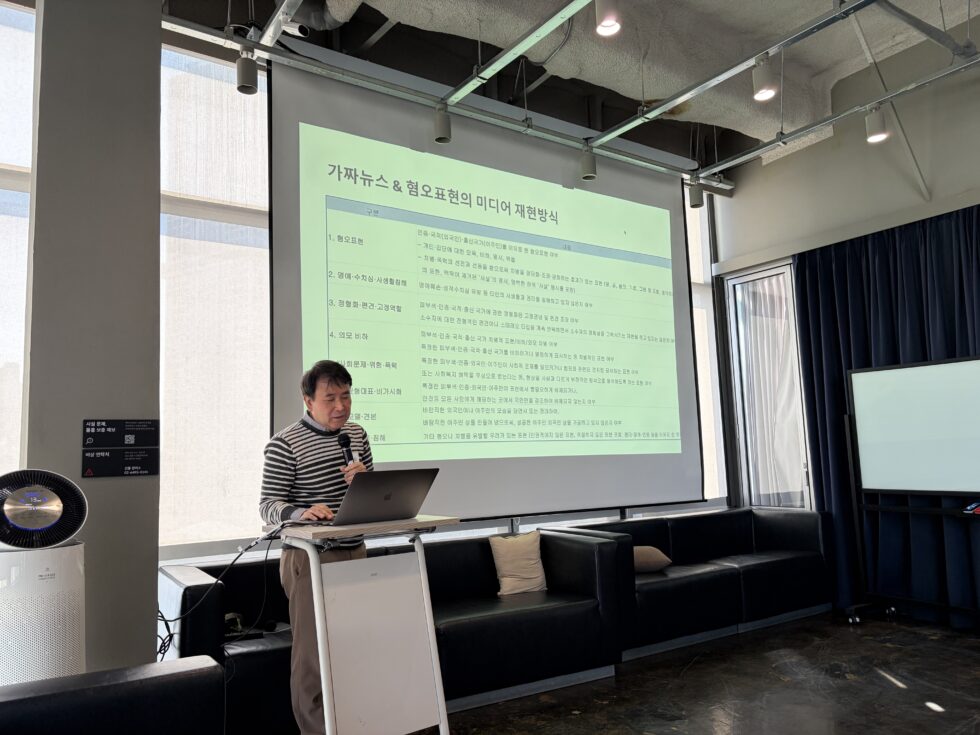
The event brought participants together to collect and verify disinformation regarding immigrants that has been spreading across social media, online communities, and news outlets. Before starting the practical fact-checking activities, Lee Wan, co-representative of the Asian Human Rights and Culture Solidarity, delivered a lecture titled "Facing Fake News." He explained the history of anti-immigrant sentiment and hate crimes in Korean society, the ways misinformation and hate speech are reproduced in the media, and the necessary conditions for diversity policies to function effectively.
Following the lecture, participants split into two groups to gather and analyze 12 suspected cases of disinformation regarding immigrants, focusing heavily on verifying two specific rumors. The first case involved a video claiming that a Chinese instructor at an elementary school in Guro-gu forced children to sing songs in Chinese. The team concluded that the video manipulated viewers by removing all context and adding an inflammatory caption, noting that singing a foreign song is a standard part of language and cultural education that was deliberately distorted to stoke anti-Chinese sentiment.
The second case tackled a rumor claiming that Chinese nationals enter Korea visa-free to kidnap and murder people for organ trafficking. The team easily debunked this using basic medical science, pointing out that organ transplants require strict tissue matching under highly controlled conditions, making random street abductions for immediate organ harvesting medically impossible.
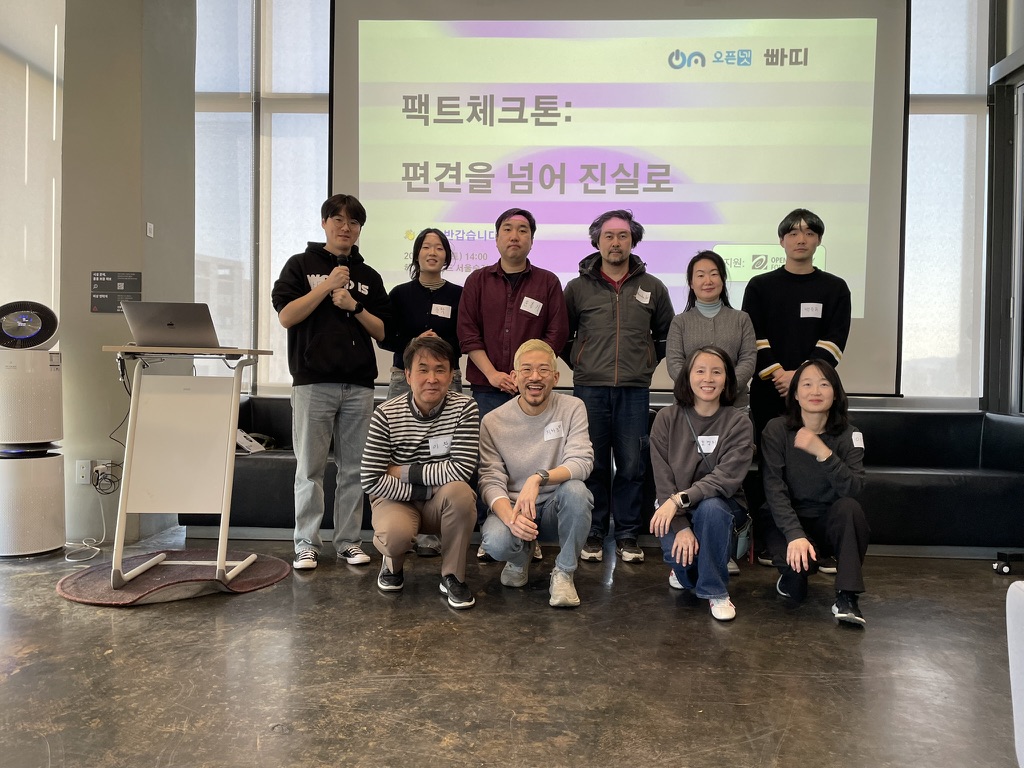
Participants wrapped up the event by sharing their reflections on the verification process. They noted that even if a piece of information contains partial facts, its ultimate meaning can be completely twisted when stripped of its original context. Ultimately, the event highlighted that effective fact-checking is not just about proving whether a claim is strictly true or false, but also about critically understanding the underlying mechanisms of how misinformation is manufactured and spread.
0 Comments