
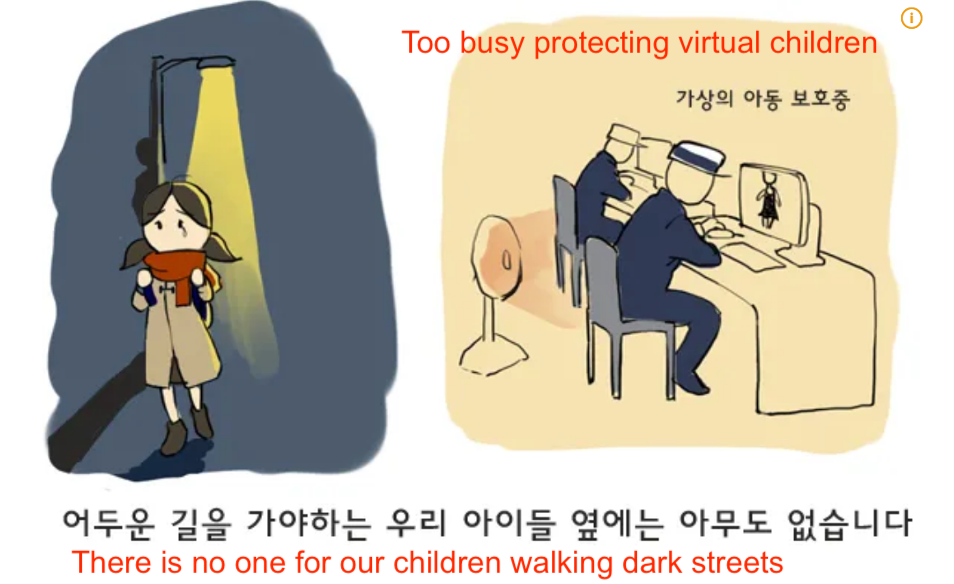
On October 5, 2026, KS Park participated a APrIGF session on CSAM regulations suppressing artistic freedom by criminalizing the material not featuring the likeness of any real child, hosted by Center for Online Safety and Liberty who announced the Drawing the Line Principle as follows:
Principle 1: Expression is Not Abuse
Principle 2: Defend Creative and Cultural Expression
Principle 3: Respect Survivor Autonomy
Principle 4: Support Evidence-Based Safety and Prevention Practices
Principle 5: Create Robust Digital Due Process Practices
Principle 6: Evaluate Impact on Marginalized Individuals and Communities
Across the Asia-Pacific region, governments and online platforms are expanding systems intended to protect children and adults from "online harms", including pornography, AI-generated abuse, obscenity, extremism and disinformation. Yet these frameworks increasingly affect communities and forms of expression far beyond their original targets, often disproportionately impacting health promotion, sex worker and LGBTIQ+ communities, fandom creators, artists, and marginalised users. . . These measures often lack nuance and context in societies where they are implemented and risk producing unintended consequences that weaken trust in digital platforms and institutions, particularly among sex worker and LGBTIQ+ communities, women, fandom creators, and other marginalized groups whose speech and participation are disproportionately affected by censorship, shadowbanning, surveillance, and overbroad enforcement practices.
This workshop will explore how online safety regulation and platform governance are reshaping freedom of expression and cultural participation across the Asia-Pacific region. The discussion will draw on examples including platform shadowbanning, criminalisation of fictional or artistic expression, censorship of sex ed and LGBTIQ+ content, and the persistence of colonial-era morality laws that continue to influence digital governance in countries across the region.
The session will also introduce and discuss the Drawing the Line Watchlist, a civil society initiative examining how legal systems and platforms distinguish between content involving real victims and forms of fictional, artistic or consensual expression. While child protection and responses to image-based abuse remain critically important goals, the workshop will ask how policymakers can avoid regulatory overreach that collapses these distinctions. . . The session will explore how resilience requires not only technical security, but also social legitimacy and user trust. Internet users are less likely to engage openly online when platforms operate without transparency, when laws blur distinctions between real harm and fictional or consensual expression, or when anonymity and privacy protections are weakened in ways that expose vulnerable communities to surveillance, harassment, or criminalization.
The session will explore how resilience requires not only technical security, but also social legitimacy and user trust. Internet users are less likely to engage openly online when platforms operate without transparency, when laws blur distinctions between real harm and fictional or consensual expression, or when anonymity and privacy protections are weakened in ways that expose vulnerable communities to surveillance, harassment, or criminalization.
Speakers and slides:
Jeremy Malcolm, Center for Online Safety and Liberty
Shambhawi Paudel, International Lesbian, Gay, Bisexual, Trans and Intersex Association Asia
https://www.opennetkorea.org/wp-content/uploads/2026/11/ILGA-Asia_APrIGF-PPT_SP-1.pdf
K.S. Park, Open Net
0 Comments