
23/10/2016
Appeals to the KCSC’s takedown requests include objections and request for withdrawal. Objections are made based on alleged error of KCSC’s decision, and requests a re-deliberation by the KCSC, while request for withdrawal is usually made after change in circumstances on information in question, and requests suspension of the takedown request’s effect. Other appeals include administrative appeal and administrative litigation

The rate of compliance for service providers and board admins in 2015 is 96%. Internet network service providers (KT, etc) that block overseas sites have 100% compliance rate without exception, and the rate for portals are also close to 100%. This shows that while Takedown Requests are ’requests’ in form, they have de facto binding power.
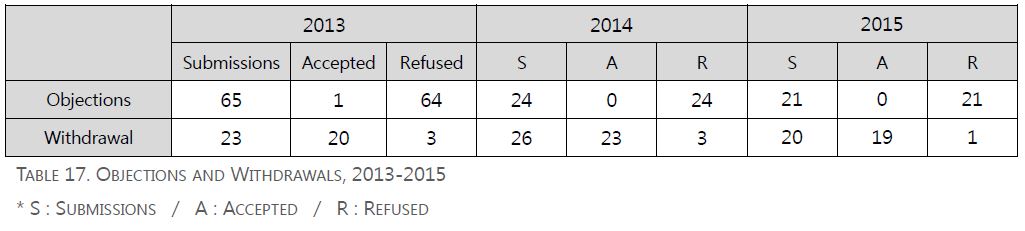
- Among 386,035 takedown requests during the period of 3 years, only 179 cases (0.05%) have been subject to objections or request for withdrawal. In 2015, only 41 cases (0.03%) of request for withdrawal or objections have been made among 148,751 cases of takedown requests. This seems to be because the owner of the information (poster or the admin of an overseas website) usually does not receive notice that their information has been deleted or blocked, and as the objection is reviewed by the KCSC itself, many people likely believe that there is low chance of KCSC reversing its position.
- In the case of objections, the success ratios in 2014 and 2015 are both 0%, indicating that KCSC rarely overturns its own decision. On the other hand, requests for withdrawal were mostly accepted which seems to be because this request is made for using the blocked URL for other purposes after deleting all alleged illegal information.
댓글 0개