
26/10/2015
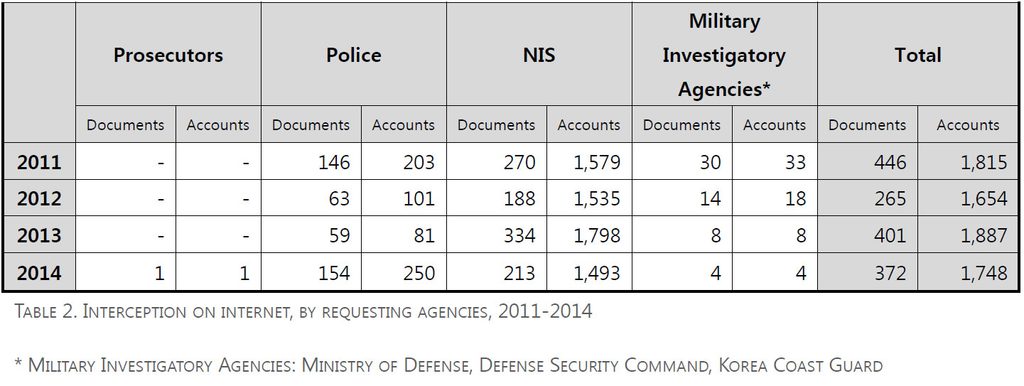
- Interception for internet (acquiring the contents of communications) has been conducted in 2014 after 372 requests, for 1,748 accounts (4.7 accounts per document).
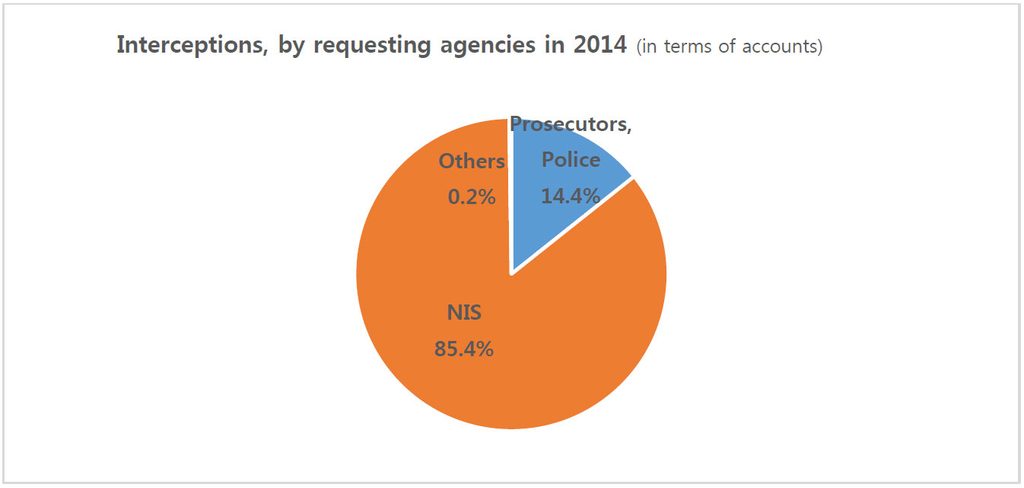
- 90% of all interceptions are made by the NIS, and seems to be employed for national security related investigations. In 2014, 85% of the interceptions were made upon NIS’ requests. However, compared to 2011-2013, interceptions by the police was at an all-time high, while that of the NIS was at an all-time low (in terms of the number of accounts)
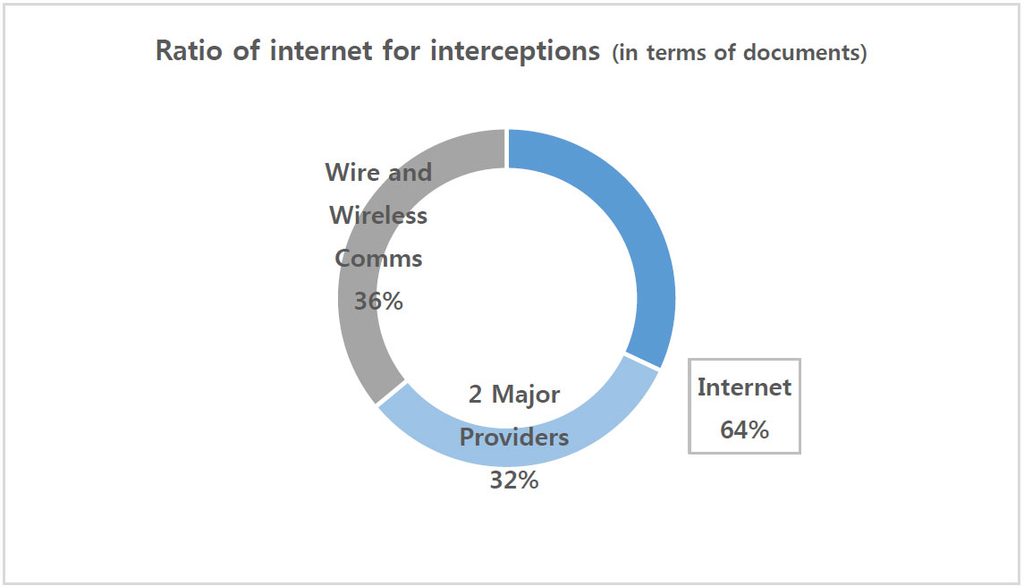
- According to the transparency report published by the two major providers, interceptions for the two firms account for about 50% of the interceptions for internet, and about 32% of all interceptions[1].
[1] In terms of documents (in terms of accounts, approx. 30% of internet, 9% of total communications)
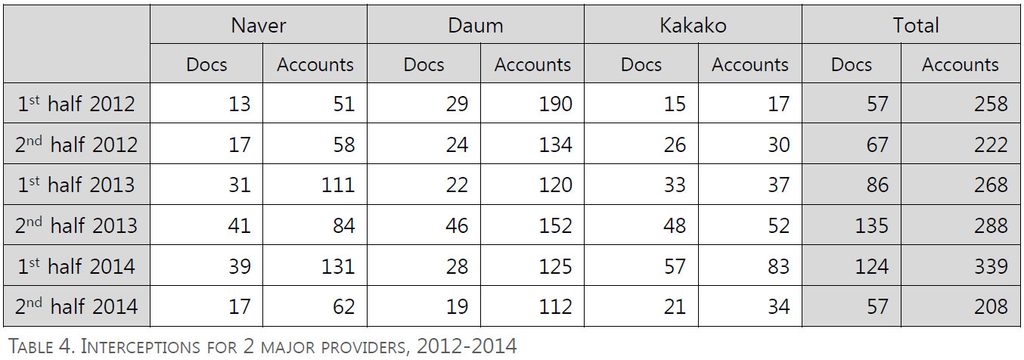
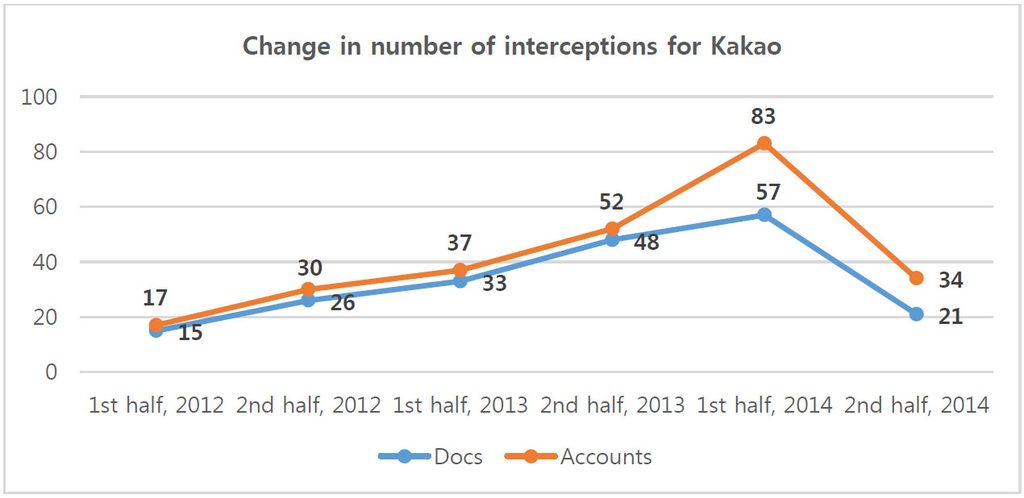
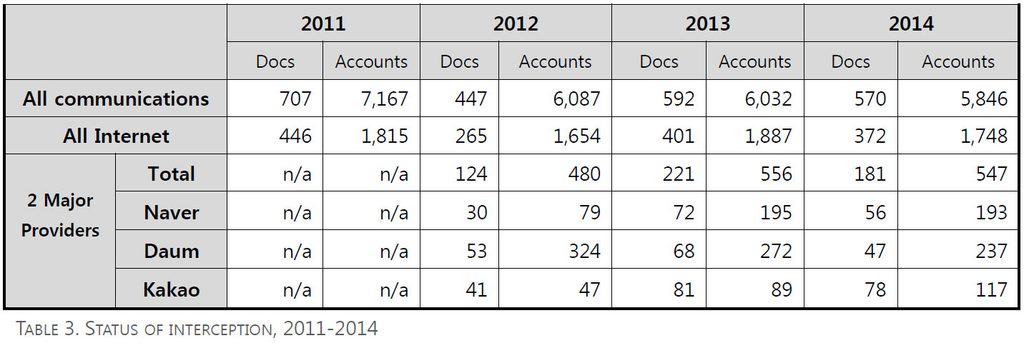
- In terms of number of accounts, the interceptions for all communications is decreasing; however, the interceptions for internet and the two major providers are on the rise. Especially of note is the fact that interceptions for Kakao, which holds more than 90% of the total Korean messenger service, has steeply increased from the first half of 2012 to first half of 2014. This trend can also be found in interceptions for Naver and Daum, which shows that interception is being conducted with increasing focus on major internet services, such as emails, messenger and communities. This is also a reflection of the current move from ground phones towards online messengers as a means of communications.
- The reason for the decrease of interceptions for Kakao in latter half of 2014 can be attributed to the mounting controversy around the prosecutors’ announcement threatening massive surveillance on KakaoTalk which began on October 2014 and resulted in Kakao declaring its intention to refuse to comply with Interception warrants[1]. Naver and Daum also saw decreasing interceptions for the second half of 2014.
[1] South Korea tries to ease cyber surveillance fears (Oct 16, 2014) http://www.reuters.com/article/2014/10/16/us-southkorea-cybersecurity-idUSKCN0I514A20141016
Korean “Digital Refugees”: Controversy over Privacy and Surveillance (Oct 21, 2014) http://impunitywatch.com/korean-digital-refugees-controversy-over-privacy-and-surveillance/
댓글 0개