
26/10/2016
A. Obscenity
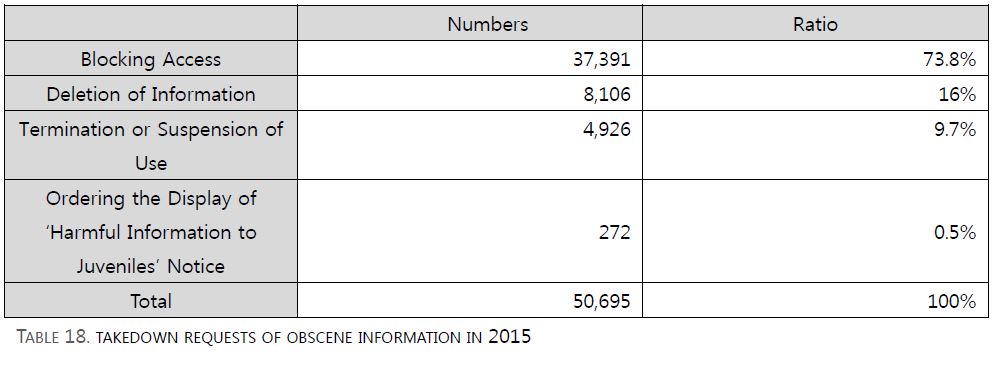
- Takedown requests for information of obscenity · prostitution takes up the biggest share, with 50,695 requests. 73.8% of the requests is ‘blocking access’, which are mostly directed to closing down websites using overseas servers.
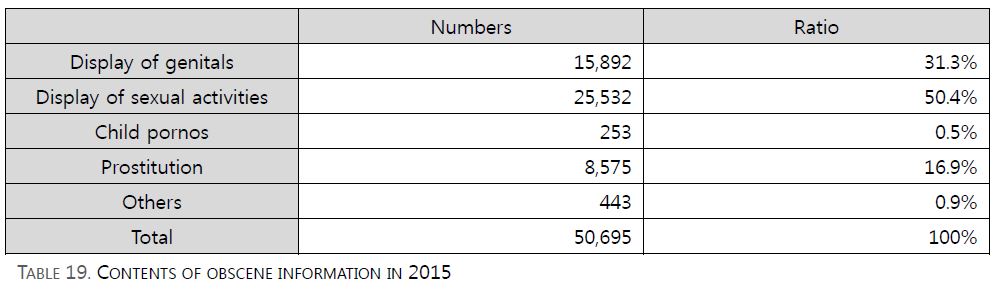
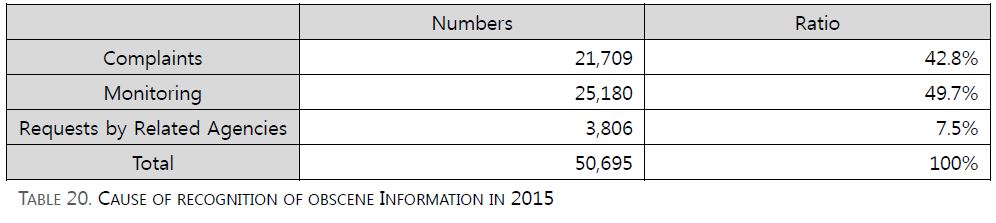
- Obscene information are mostly image or videos of genitals and sexual activities, and recognized by KCSC’s monitoring (49.7%) or complaints (42.8%).
B. Defamation
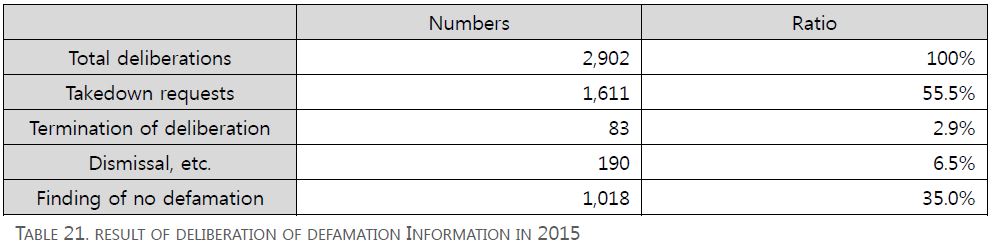
- In 2015, 2,902 cases of defamation were deliberated, among which 1,611 cases (55.5%) were decided to be given takedown requests, and 1,018 cases (35%) were found to not constitute defamation.
- Out of 363 cases of whether consumer review constitutes defamation, 296 cases (79.9%) were found to be non-defamation or dismissed (non-circulation of information), and only 67 cases (18.5%) were decided to be given takedown requests. We can see that consumer reviews are more easily found to have public value and not constitute defamatory information.
- For appeals of the author whose information was blocked in accordance with ‘temporary measure’ of a service provider[1], out of 365 cases 203 (55.6%) cases were found not to constitute defamation, 107 (29.3%) cases were dismissed, and 55 (15.1%) cases were subject to takedown requests.
[1] Article 44-2 (Request for Deletion of Information), Act On Promotion Of Information And Communications Network Utilization And Information Protection, Etc.
(1) where information provided through an information and communications network purposely to make it public intrudes on other persons’ privacy, defames other persons, or violates other persons’ right otherwise, the victim of such violation may request the provider of information and communications services who handled the information to delete the information or publish a rebuttable statement (hereinafter referred to as “deletion or rebuttal”), presenting it materials supporting the alleged violation.
(2) a provider of information and communications services shall, upon receiving a request for deletion or rebuttal of the information under paragraph (1), delete the information, take a temporary measure, or any other necessary measure, and shall notify the applicant and the publisher of the information immediately. In such cases, the provider of information and communications services shall make it known to users that it has taken necessary measures by posting a public notice on the relevant open message board or in any other way.
(4) a provider of information and communications services may, if it is difficult to judge whether information violates any right or it is anticipated that there will probably be a dispute between interested parties, take a measure to block access to the information temporarily (hereinafter referred to as “temporary measures”), irrespective of a request for deletion of the information under paragraph (1). In such cases, the period of time for the temporary measure shall not exceed 30 days.
C. Harmful information
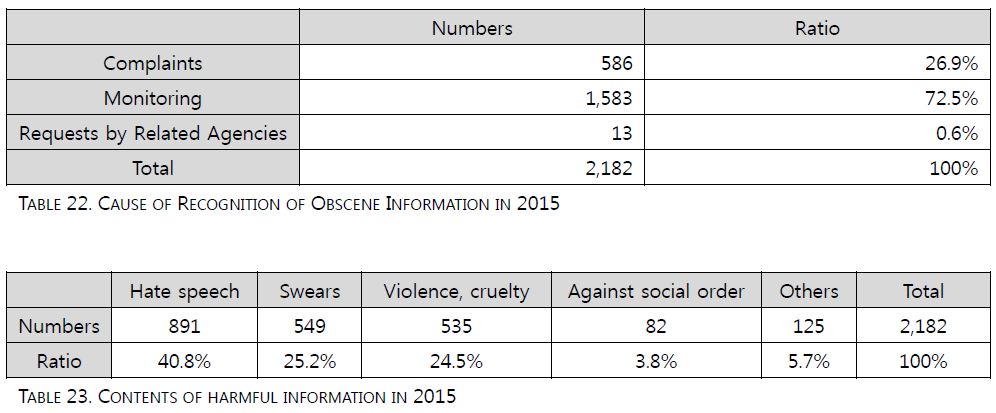
- Deliberations on harmful information is mostly started by KCSC monitoring (72.5%). Most of them fall under the category of hate speech, swears, violence and cruelty, and takedown requests for ‘inciting social unrest’ and ‘against social order’ was first made in 2015, for 82 cases.
댓글 0개